Tooth Remineralization Protocol: Healing Teeth From Within
Written by The Tooth Reset Team
Based on Research by Dr. Weston A. Price & Dr. May Mellanby
For decades, we’ve been told that cavities are simply the result of sugar sitting on your teeth. However, new insights into historical dental research reveal that your teeth are living entities. Your body naturally defends them through a process of internal fluid transport and remineralization.
What Is Tooth Remineralization?
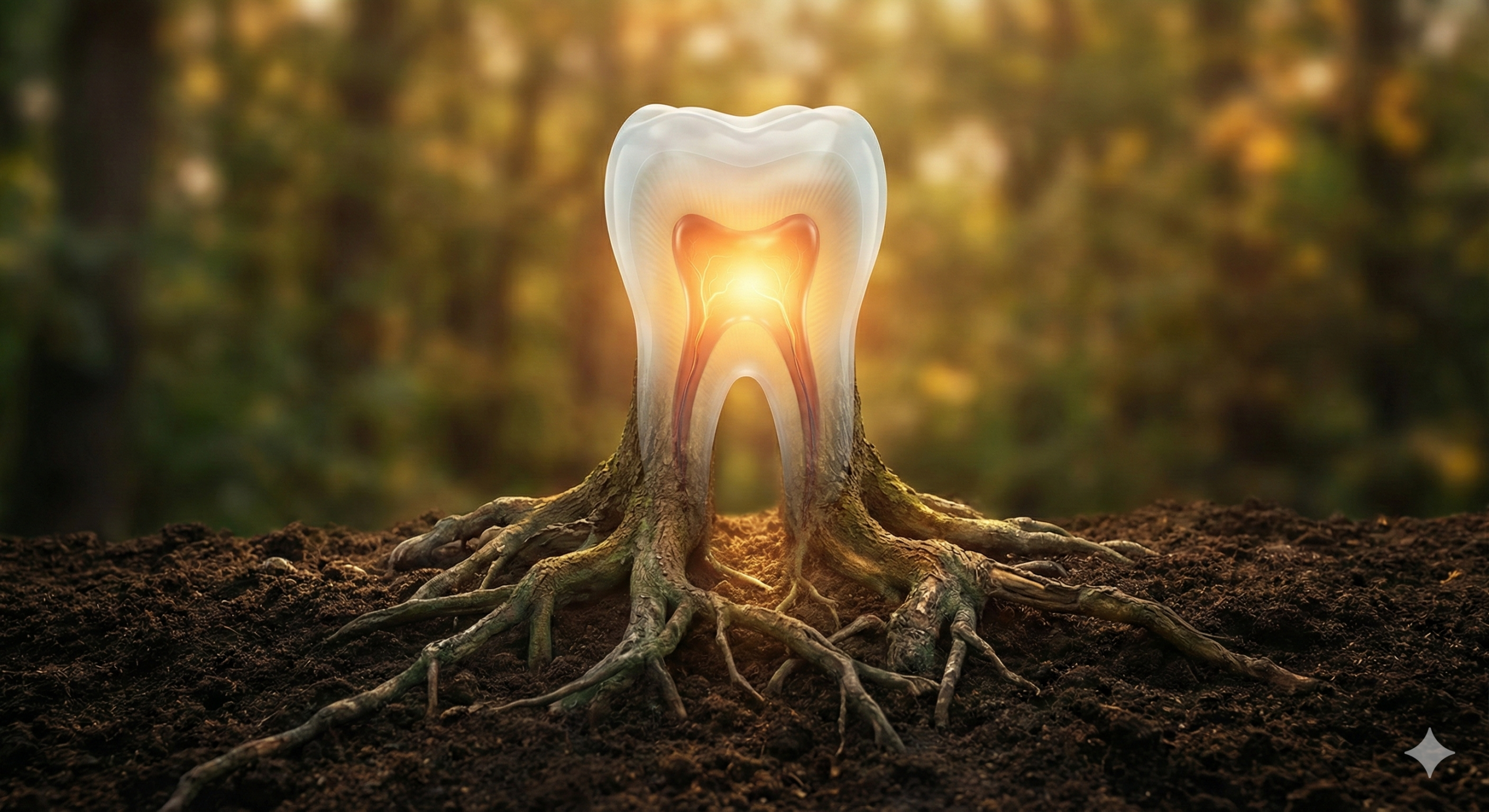
Remineralization is a natural repair process, but it doesn’t just happen from the outside in. Your teeth are not dead stones; they are living organs with a blood supply and a nerve. In a healthy state, your teeth utilize a mechanism called dentinal fluid flow. This fluid flows outward from the pulp chamber, through microscopic tubules in the dentin, and onto the enamel.
This outward flow acts as a shield, repelling bacteria and acids while delivering calcium and phosphorus to the tooth surface. When your body is properly nourished, this process keeps your enamel hard and “glassy.”
If you have a nutrient deficiency, this flow can stall or even reverse, sucking bacteria inward. This is when decay begins.
A tooth remineralization protocol
is a systematic approach to oral health that goes beyond surface hygiene. It focuses on restoring the flow of minerals—specifically calcium and phosphorus—into the enamel by addressing the body’s internal nutritional needs and supporting dentinal fluid flow.
What Causes Tooth Demineralization?
While bacteria are present, the root cause of demineralization is often what is happening inside your body. Two major internal factors cause your teeth to lose minerals:
1. The “Mineral Robbers” (Phytic Acid) You might be eating “healthy” foods that are actually stripping minerals from your body. Phytic acid is an “anti-nutrient” found in unfermented grains (like standard oatmeal), raw nuts, and legumes. Phytic acid binds to magnesium, calcium, and zinc in your gut, flushing them out of your system before your teeth can use them. If you consume high amounts of these “mineral robbers,” your saliva will lack the building blocks needed to repair enamel.
2. Lack of “Activator” Nutrients Even if you eat plenty of calcium, it cannot repair your teeth without specific fat-soluble vitamins to direct it. Without Vitamins D and K2, calcium remains in your blood (or calcifies your arteries) rather than strengthening your teeth.
The 3-Step Tooth Remineralization Protocol
While brushing and flossing are important for hygiene, true strength comes from feeding the tooth. To switch your teeth from a state of decay to a state of defense, you must follow a protocol that addresses the root cause:
Step 1: Remove the “Mineral Robbers”
You might be eating “healthy” foods that are actually blocking tooth remineralization. Phytic acid is an “anti-nutrient” found in unfermented grains (like standard oatmeal), raw nuts, and legumes.
Phytic acid binds to magnesium, calcium, and zinc in your gut, flushing them out of your system before your teeth can use them. A proper protocol eliminates these robbers so your saliva has the building blocks needed to repair enamel.
Step 2: Add the “Activator” Nutrients
Even if you eat plenty of calcium, it cannot repair your teeth without specific fat-soluble vitamins to direct it.
- Vitamin D (The Fuel): Essential for absorbing calcium from your diet.
- Vitamin K2 (The Traffic Director): Activates a protein called osteocalcin which locks calcium into the tooth structure.
- Vitamin A (The Architect): Essential for the health of the gum tissue and dentin cells.
Step 3: Support the Absorption with Healthy Fats
Because these vitamins are fat-soluble, they must be consumed with healthy saturated fats (like grass-fed butter, ghee, or coconut oil) to be absorbed.
The “Eat This, Not That” Approach: To support remineralization, the Tooth Reset Protocol suggests swapping mineral-depleting foods for mineral-rich ones:
- Avoid: Instant oatmeal, raw almonds, and vegetable oils.
- Eat: Pastured eggs, grass-fed dairy (butter/ghee), organ meats, and fermented foods like sourdough or sauerkraut.
How Long Does It Take to Remineralize Teeth?
Biology takes time, but the results can be felt relatively quickly.
- 21 Days: Most people following a specific nutritional protocol report a significant reduction in tooth sensitivity and a change in tooth texture within three weeks.
- 6 to 7 Months: For actual structural healing—where a soft lesion (“sticky” spot) re-hardens into healthy enamel—research suggests a consistent period of roughly 6 months.
Signs of Tooth Remineralization
How do you know if you are successfully feeding your teeth? Look for these internal signs of health:
- The “Glossy” Test: Run your tongue over your teeth. Demineralized teeth feel “fuzzy” (like a sweater). Remineralized teeth feel smooth and glassy.
- Zero Sensitivity: You should be able to drink cold water without pain.
- Halted Decay: Existing small cavities stop growing and become hard/dark (arrested decay) rather than soft/light.
Your teeth are capable of defense and regeneration. By removing the “robbers” and adding the “activators,” you can take control of your dental destiny.
Ready to start the journey? Get the full checklist and meal plan for our Tooth Remineralization Protocol at ToothReset.com.